
Uber- Redesigning waiting room experience (Ongoing)
Skills:
Usability Testing / Product Design/ User Research
Team:
Ruohan Li Annie Huang Alex Foster Zhian Hu
Duration
Jan. 2026- March. 2026
Stakeholder:
Uber, HCDE 517: Usability Testing
Project Overview
This project examines how riders experience and navigate uncertainty during the waiting phase of Uber rides, using real-world usability testing to identify breakdowns and opportunities for clearer, more trustworthy interactions. The project is sponsored by Uber, collaborating with UW HCDE's 517: Usability Testing Course.
The Problem
1. Consistency and Standards in Waiting Phase
Using the word "Congratulations!" implies a successful outcome. This creates a false sense of completion when the user is actually still in a waiting state.
The phrase "Confirming your ride" is used while the system is still searching. This creates a mismatch with the real world; in a user's mind, "confirming" happens after a match is made, not during the search.
The UI simultaneously tells the rider it is "looking for a ride" and "confirming one." This violates the principle of clear system status, leaving the user unsure of exactly what stage the process is in.


2. User Control in Pick-up Page
Lack of "Something is Wrong" Options: When a driver arrives, users have limited control if the situation feels incorrect.
Inability to Address Common Errors: The system does not provide easy paths for intervention in scenarios where the driver is on the wrong side of the street, the pickup point is unclear, or the app shows "arrived" while the vehicle is facing the wrong direction.
Communication Barriers: There is a noted need for better opportunities for driver-rider communication to resolve these "something feels off" moments before a ride is canceled or abandoned.
User Task
1. Confirm the ride and wait to be assigned a ride

Goal:
Understand how participants interpret commitment and expectations during the wait for the system to find him/her a ride. Verify if the ‘finding a ride’ status information is conveyed clearly to the riders.
User Success Metrics:
Participants can clearly explain what they expect to happen next and what they’ve committed to
2. Send a message to a friend
Goal:
Understand participants’ perception of ETA and how they communicate it with others over text.
User Success Metrics:
Participant is able to send a message to a researcher with the time of their

3. Monitor the app while the driver is on the way

Goal:
Observe how participants track progress and manage uncertainty
User Success metrics:
Participant understands where the driver is and what they should do while waiting
Participant Profiles

Where & When did we test?


Starting Location: Westlake Link Station
Destination: Chinatown Link Station
Participants requested a ride from the starting location to the destination
Real-world urban environment with high ride demand
Conducted from late morning to afternoon (11AM–3 PM)
Finding 1
Cancellation discoverability gap between before and after driver assignment

Participants easily located the cancel button before driver assignment.
6 out of 6 participants quickly pulled the draggable sheet open [A] to quickly locate the cancel button [B].
One participant mentioned that even though it wasn’t instantly visible, they knew that it could be found at the bottom of the screen:
“So my first impression is that it’s not very visible at first glance. But I know that if I pull [the tab] up, it's gonna have like the little button right there for you to cancel.” -P1

Participants could not easily locate the cancel button after driver assignment [A].
2 out of 6 participants viewed other screens or buttons before finding the cancel button.
4 out of 7 participants scrolled to the bottom of the screen, like before the driver assignment, and went to the top to locate the cancel button in Ride details.
Finding 1
Opprtunity
01 Relocate the cancel button to be instantly visible without additional navigation
02 Make the cancel button location more closely match where it is before and after in the driver assignment stages

Finding 2
-Staying informed during the wait was inconsistent
While waiting the driver to be assigned...

Finding 2
-Staying informed during the wait was inconsistent
“How confident were you able to stay informed about your ride status while you are outside of the app?” (On a scale 1-5)

Finding 2
-Staying informed during the wait was inconsistent
When does it get inconsistent?

Finding 2
-Staying informed during the wait was inconsistent
Inconsistent Notification Activity

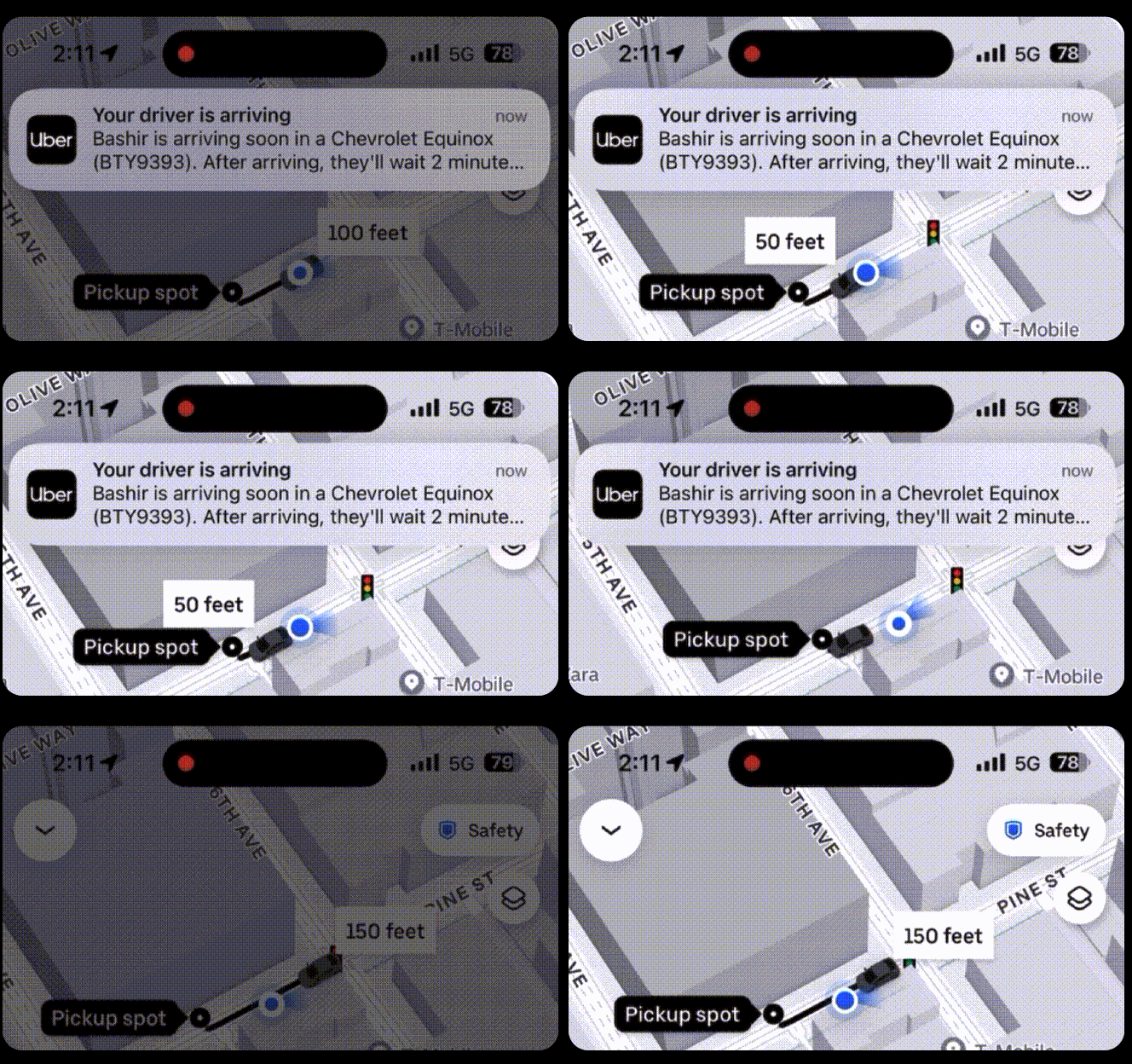
4 out of 7 participant did not receive the “Your driver is arriving” notification. (2 out of 4 did not receive it inside of the app, while 1 out of 4 did not receive when outside of the app)
1 Participant (P3) received “Check your ride” notification, but not “driver is arriving”.
A participant’s iPhone notification settings didn't always reflect how they actually want to be alerted during a ride. (P6)
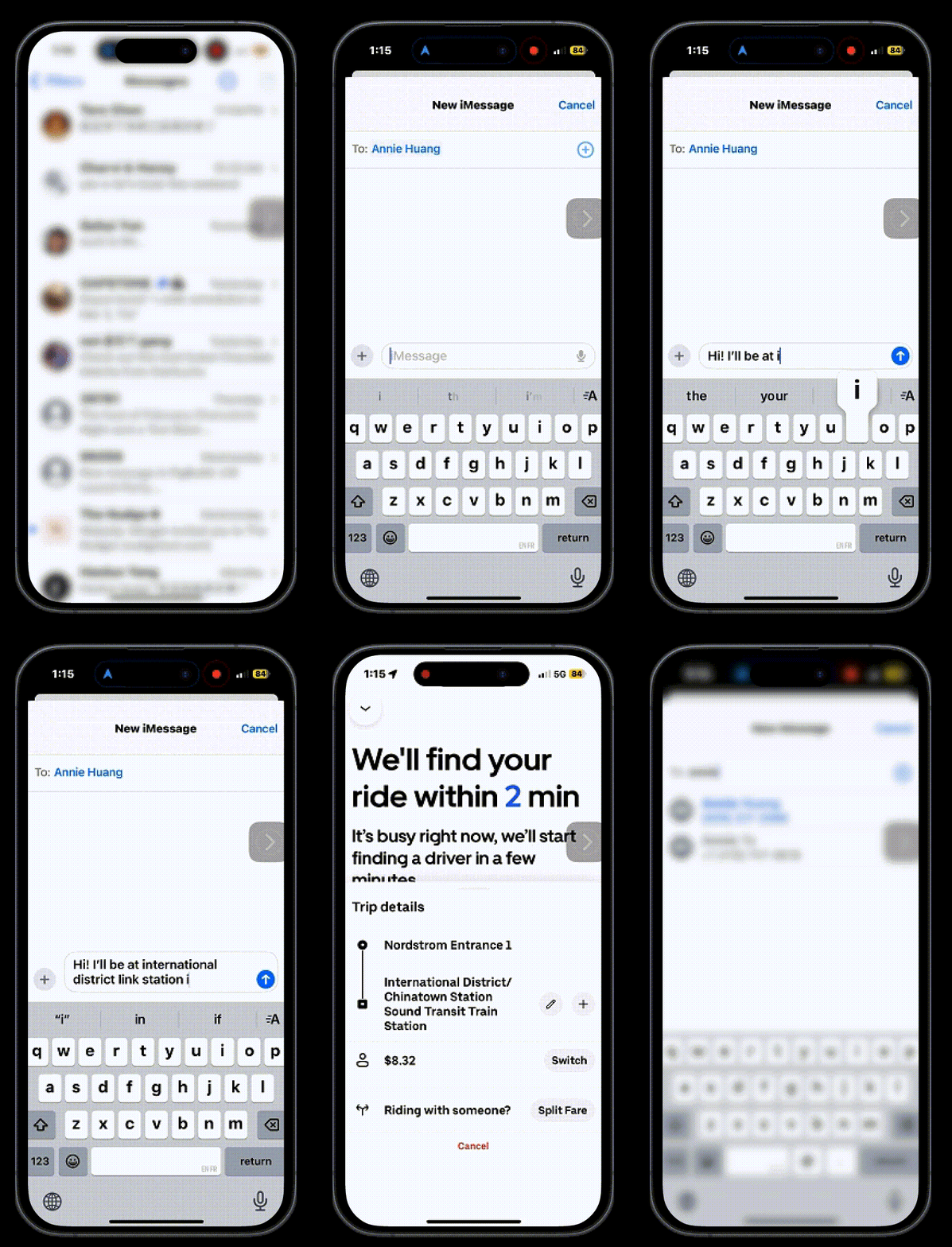
Finding 2
-Staying informed during the wait was inconsistent
Inconsistent Notification Activity

Finding 2
-Staying informed during the wait was inconsistent
Opportunity: Granting user affordances

Finding 3
-Clear waiting information but limited visibility into how drivers are found.
User Insight

User Insight


Opportunity

Finding 04: Riders lack reassurance about whether the waiting time remains acceptable in driver-matching waiting room.

Evidence 1: Price is not the primary driver

Evidence 2: Decision logic is based on waiting tolerance

Missing reassurance during the waiting process

Opportunity: Restore reassurance during the waiting process

What We Would Do Next Time
Save post-task questionnaire for after the ride
Allow participants to give more honest feedback
Give participants a break from the high-pressure tasks (and potentially conversations)
Prepare more probe questions to account for variable wait times
Gather more consistent and rich insights
Improve data consistency
Keep the same roles across all sessions
Have more than just one notetaker