Gesture Simplicity
Designed intuitive and reliable in-air gesture interactions for Audi’s rear-seat entertainment system.
Audi HMI · Summer 2025
Gesture-based interactions, settings navigation, and AI voice opportunities for a more intuitive rear-seat entertainment experience.
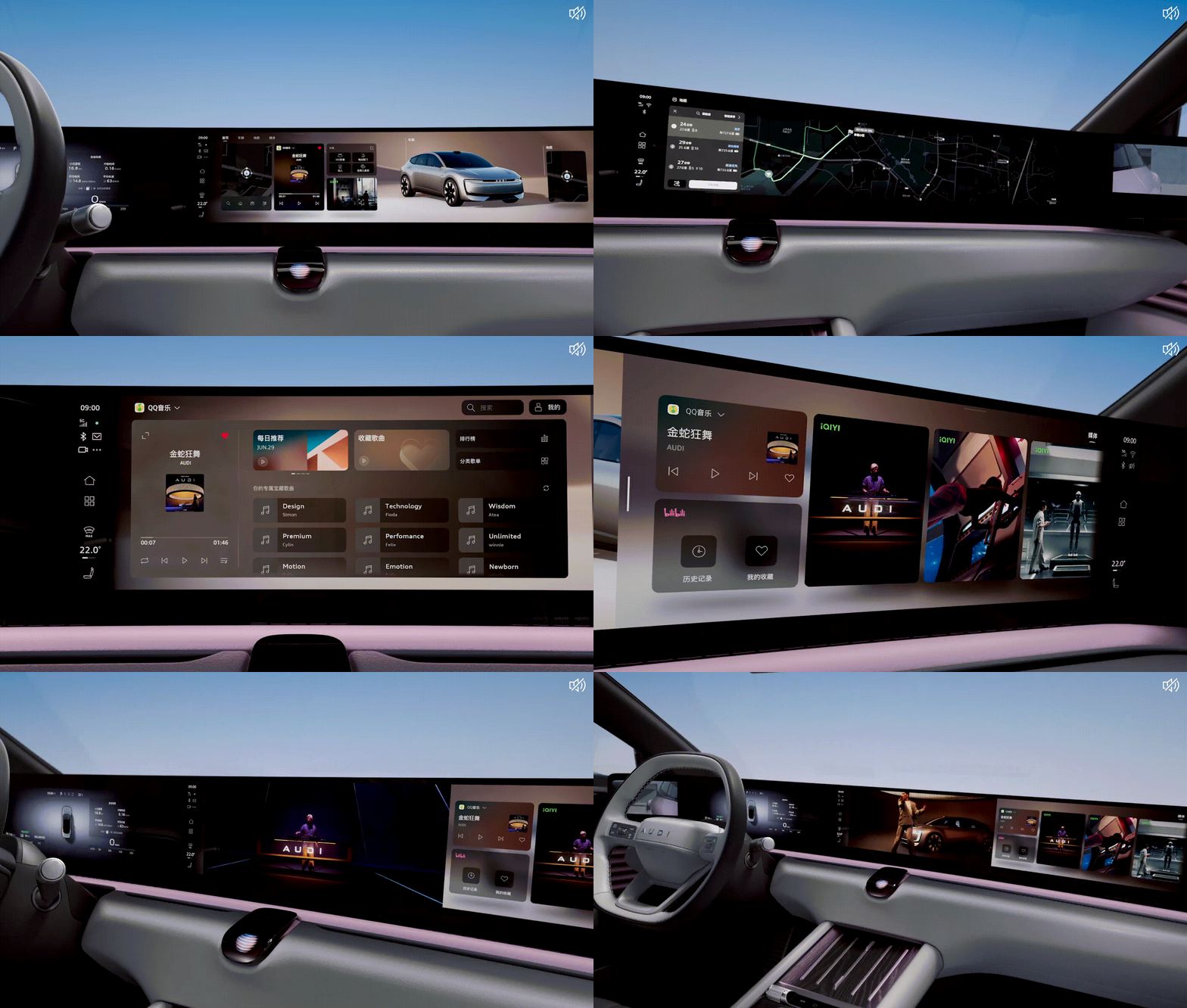
In summer 2025, I interned at Audi's HMI team as a UX designer. I focused on gesture-based interactions and the settings interface of the rear-seat entertainment system, aiming to create intuitive, seamless user flows. Collaborating closely with designers and engineers, I contributed to research, prototyping, and interaction design that enhanced usability and aligned with Audi’s vision for intelligent, human-centered HMI design.
Designed intuitive in-air gesture interactions for in-car infotainment.
Conducted competitive analysis of automotive HMI experiences.
Collaborated with engineers and PMs to prototype and refine interactions.
Created wireframes and motion prototypes for multi-modal interactions.
Reported design rationale to stakeholders in Germany.
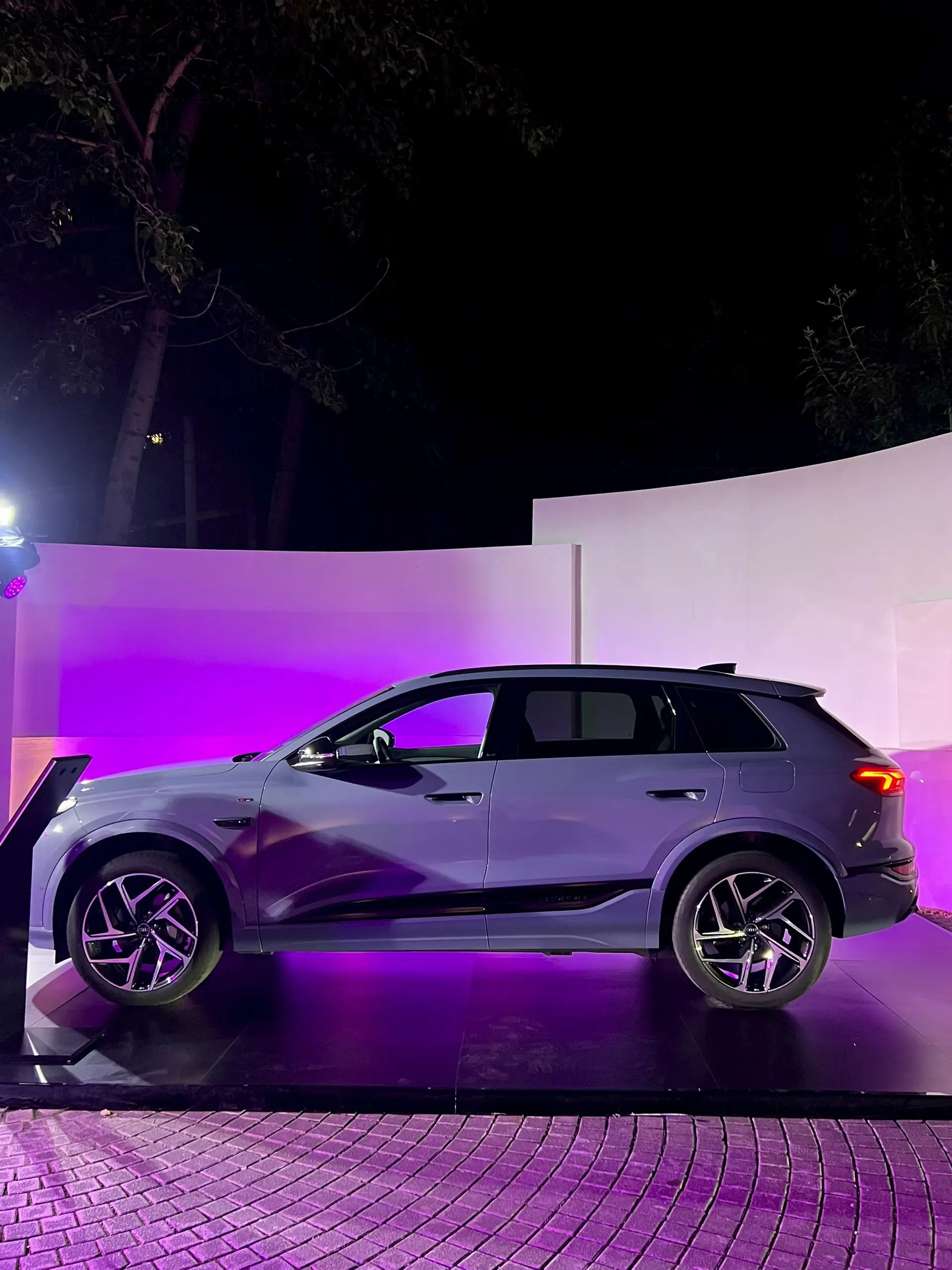
The project focused on developing the in-car HMI experience for Audi’s new e-tron model targeted at the Asian market, where luxury users expect highly personalized, tech-driven interactions.
With the rise of electric mobility, the e-tron series aims to redefine in-car comfort through multi-modal interaction, combining gesture, touch, and voice controls to create an intuitive, human-centered interface. The design effort emphasized cultural adaptability, seamless digital integration, and premium aesthetics consistent with Audi’s global brand identity.
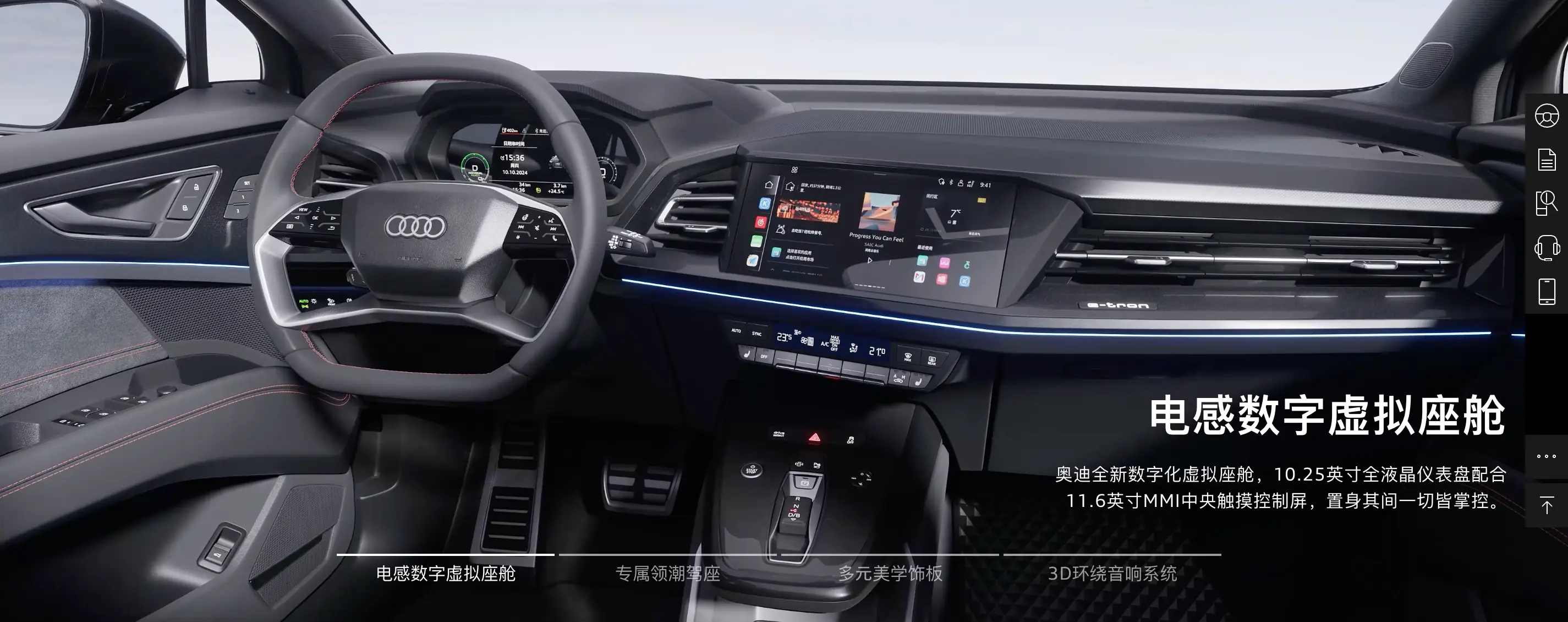
Designed intuitive and reliable in-air gesture interactions for Audi’s rear-seat entertainment system.
Redesigned the settings interface of Audi’s rear-seat entertainment system to reduce cognitive overload.
Explored how AI-powered voice assistants can enhance the rear-seat experience by enabling precise car control.
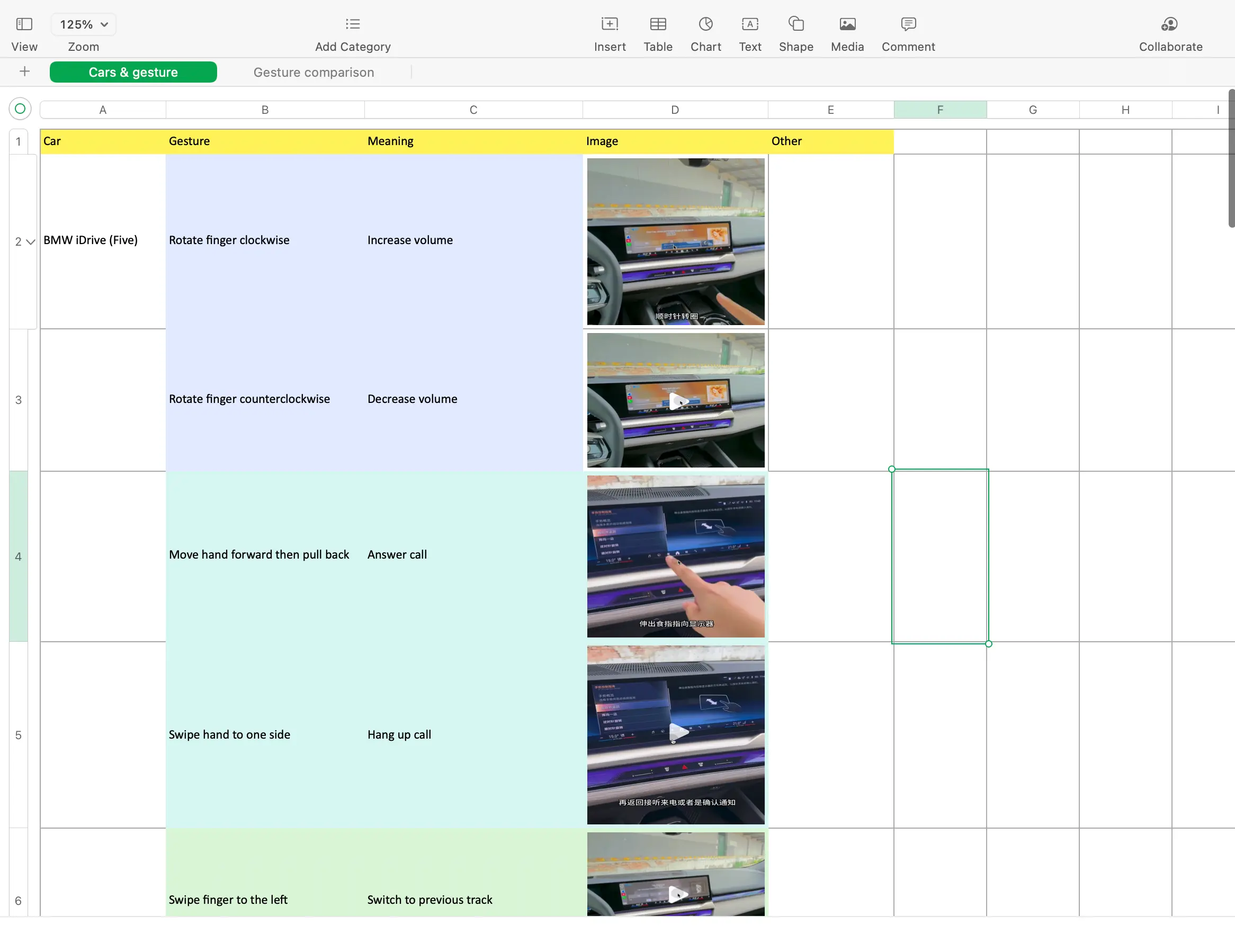
I conducted a competitive analysis of in-air gesture systems across major automotive brands, including BMW, Mercedes-Benz, and NIO, to identify common interaction patterns and gaps in usability. Based on these findings, I helped define Audi’s gesture interaction logic and settings structure, outlining intuitive hand movements for core in-car functions such as media control and call management. This research informed the design direction for the Air Gesture Settings interface, ensuring consistency, simplicity, and seamless integration with Audi’s HMI ecosystem.
Compared gesture vocabularies and feedback patterns across BMW, Mercedes-Benz, and NIO.
Mapped simple, memorable hand movements to media control and call management.
Structured settings so gestures remain understandable and consistent with Audi’s HMI ecosystem.
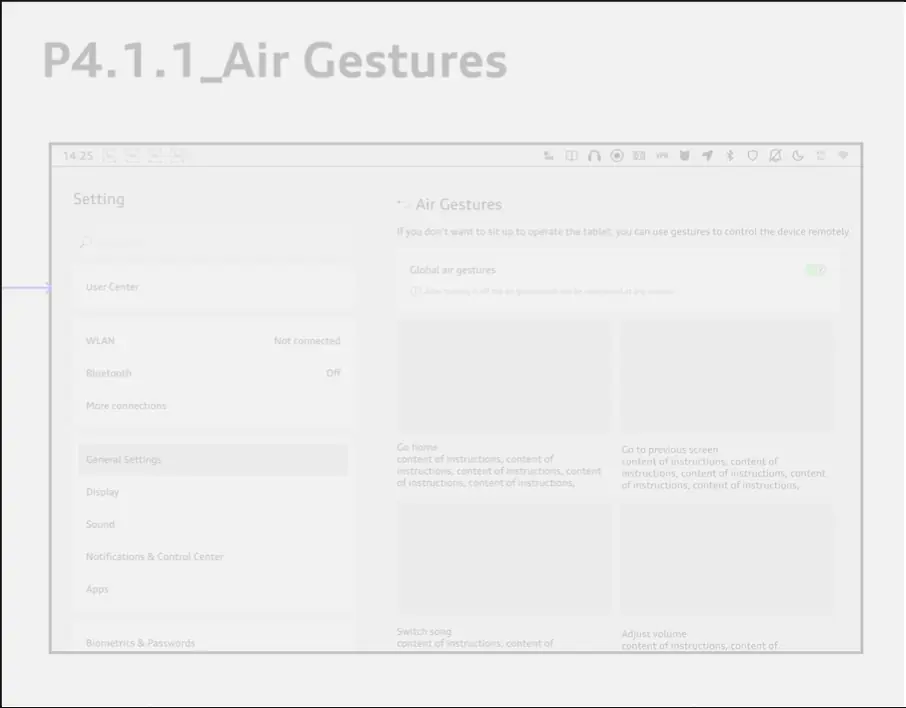
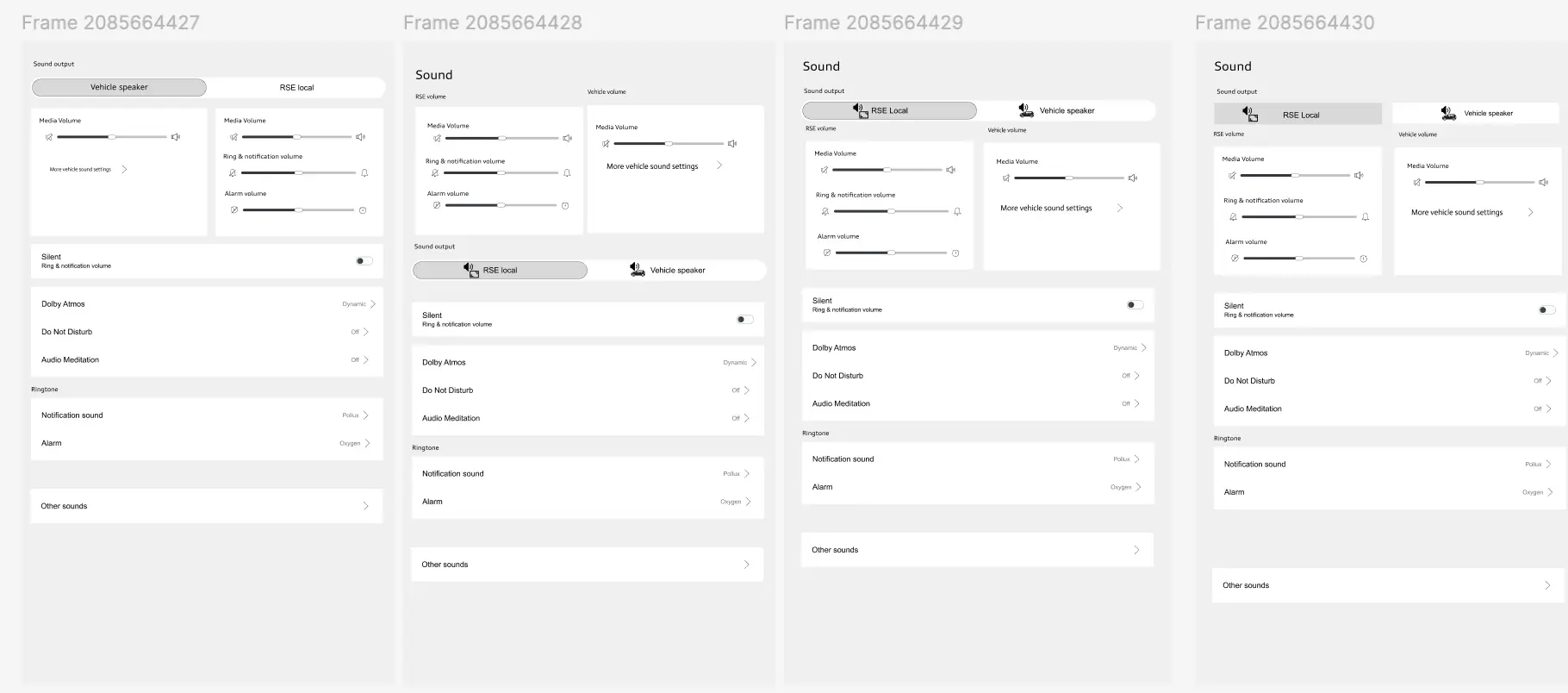
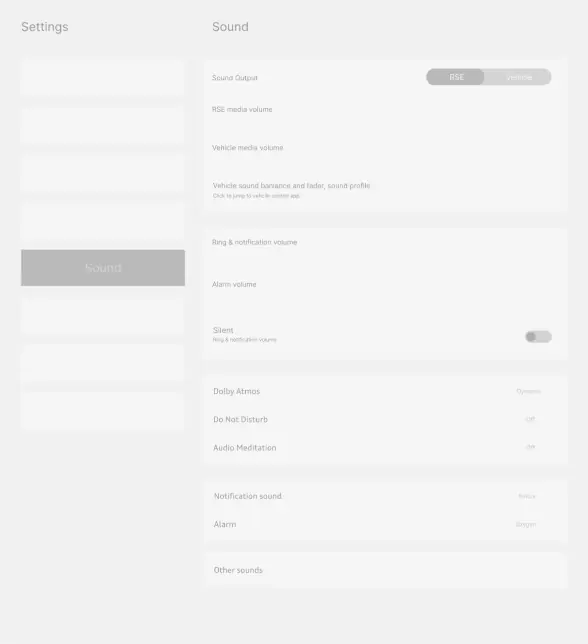
For the settings redesign, I analyzed the existing information architecture of Audi’s rear-seat entertainment system to identify redundant paths and overly complex menu hierarchies. Working closely with the German HMI and product management teams, I aligned design priorities and ensured consistency with Audi’s design language. I then created wireframes and interactive prototypes to reorganize categories, simplify navigation, and reduce cognitive load for users.
Reviewed the existing hierarchy to locate duplicated paths, unclear categories, and unnecessary depth.
Aligned categories and navigation logic with German HMI and product management partners.
Created wireframes and interactive flows that made sound and vehicle settings easier to scan.
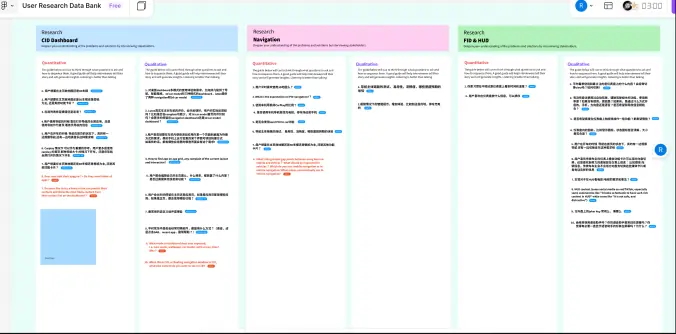
For this concept, I explored opportunities to enhance Audi’s in-car voice assistant by integrating proactive yet transparent AI behaviors. I analyzed existing interaction flows to identify moments where contextual suggestions could assist users without interrupting their sense of control. I organized both quantitative and qualitative research questions, then conducted a 20-question user survey to gather actionable insights on usability and preferences. After collecting data, I collaborated with the HMI design team to synthesize survey and interview results.
Identified moments where contextual suggestions could help without taking control away from passengers.
Structured quantitative and qualitative questions and conducted a 20-question user survey.
Worked with the HMI design team to turn survey and interview findings into actionable opportunities.
Learned how HMI differs from traditional web/app design: gestures, physical environments, safety, and multi-sensory feedback must all be considered together.
Discovered the importance of designing interactions that are not only creative but also safe, context-aware, and feasible in motion.
Gained a deeper awareness of cognitive load, situational awareness, and the need to design for real-world constraints, not just ideal scenarios.