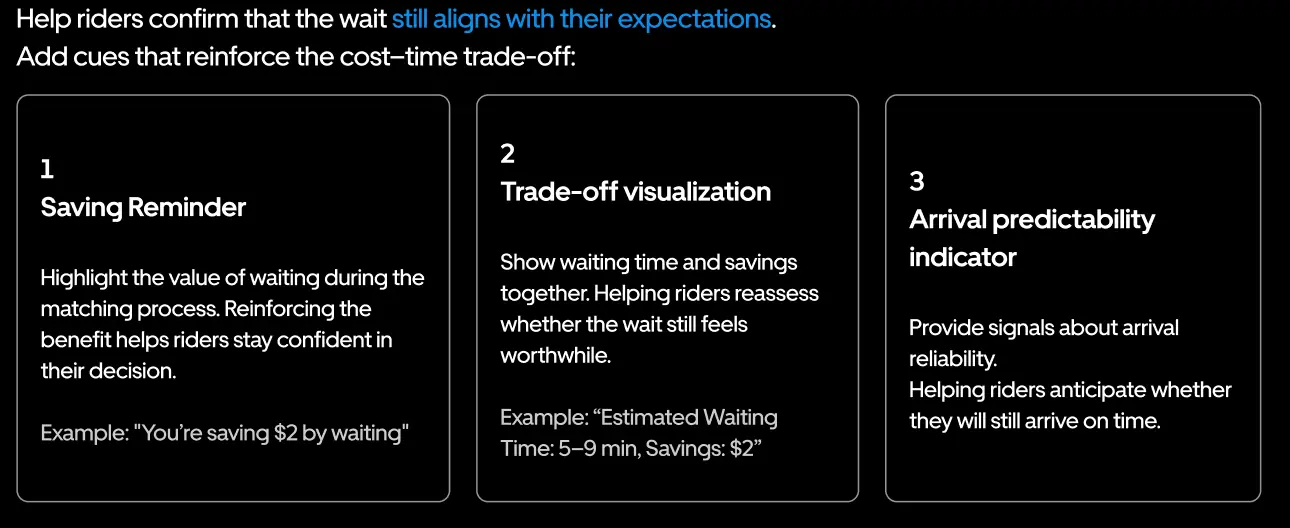
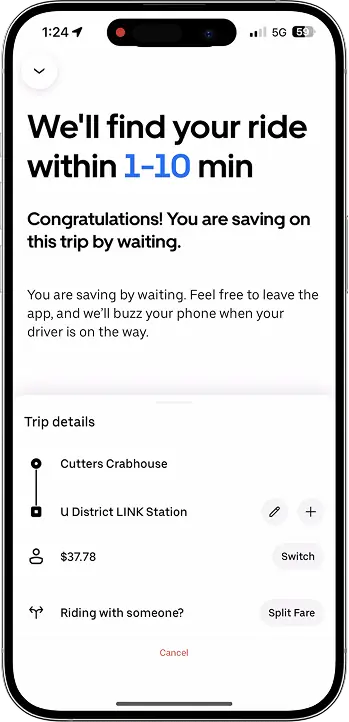
False completion
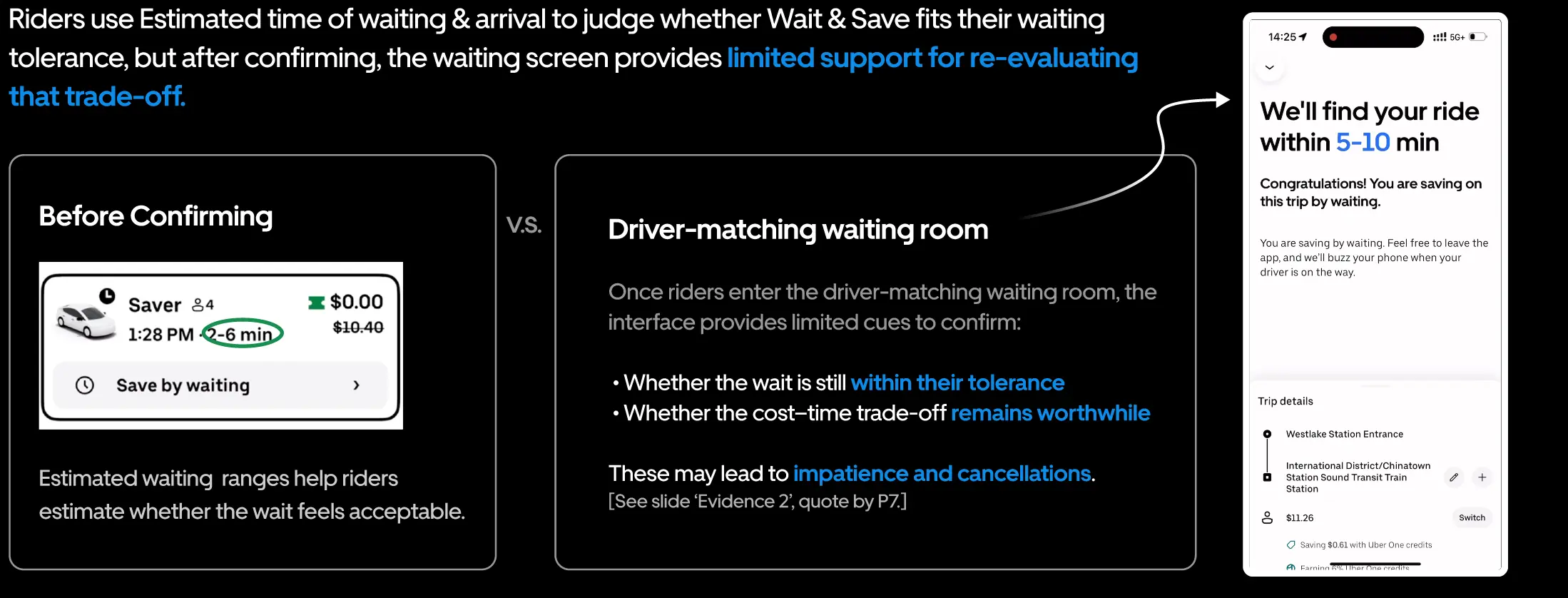
Using the word “Congratulations!” implies a successful outcome. This creates a false sense of completion when the user is actually still in a waiting state.
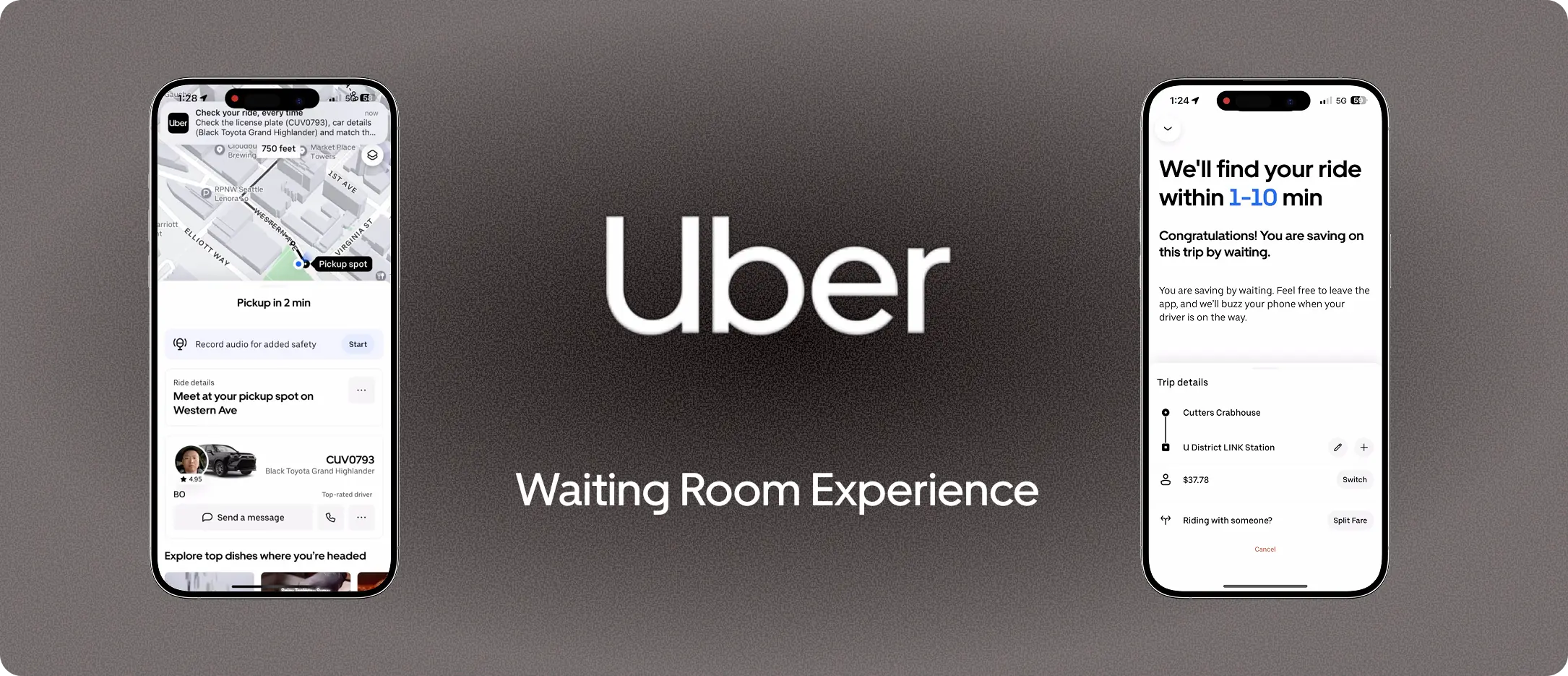
This project examines how riders experience and navigate uncertainty during the waiting phase of Uber rides, using real-world usability testing to identify breakdowns and opportunities for clearer, more trustworthy interactions. The project is sponsored by Uber, collaborating with UW HCDE's 517: Usability Testing Course.
Using the word “Congratulations!” implies a successful outcome. This creates a false sense of completion when the user is actually still in a waiting state.
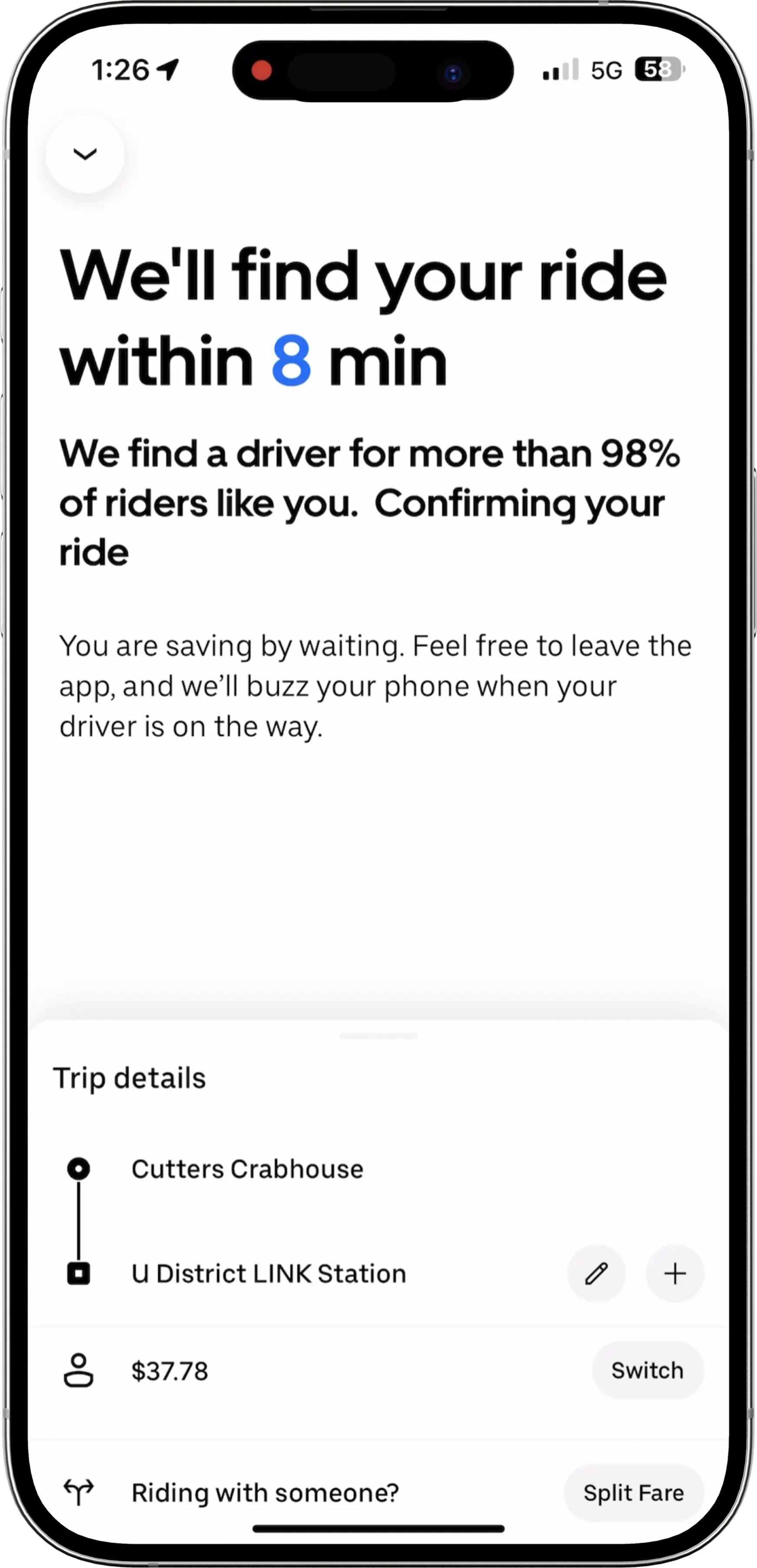
The phrase “Confirming your ride” is used while the system is still searching. In a user's mind, “confirming” happens after a match is made, not during the search.
The UI simultaneously tells the rider it is “looking for a ride” and “confirming one,” leaving the user unsure of exactly what stage the process is in.
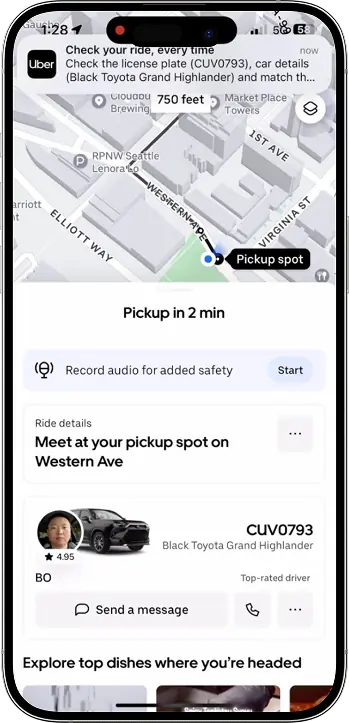
When a driver arrives, users have limited control if the situation feels incorrect.
The system does not provide easy paths for intervention when the driver is on the wrong side of the street, the pickup point is unclear, or the app shows “arrived” while the vehicle is facing the wrong direction.
There is a need for better opportunities for driver-rider communication to resolve these “something feels off” moments before a ride is canceled or abandoned.



Participants moved through three connected moments: committing to the ride, communicating an ETA, and monitoring the driver's arrival.
Goal: Understand how participants interpret commitment and expectations while the system finds a ride, and verify whether “finding a ride” status is clear.
User success metric: Participants can clearly explain what they expect to happen next and what they have committed to.
Goal: Understand participants' perception of ETA and how they communicate it with others over text.
User success metric: The participant is able to send a message to a researcher with the time of their arrival.
Goal: Observe how participants track progress and manage uncertainty.
User success metrics: The participant understands where the driver is and what they should do while waiting.
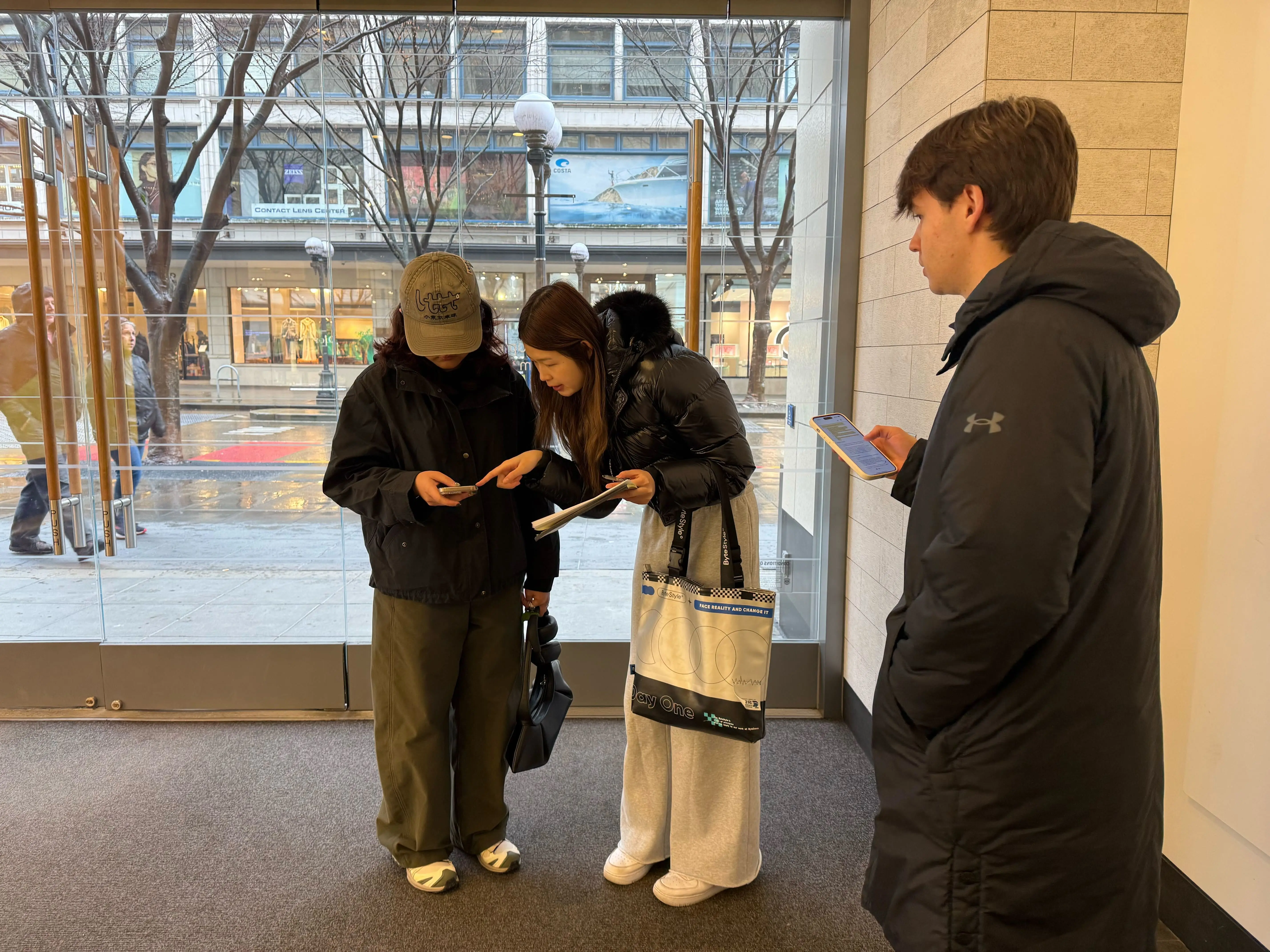
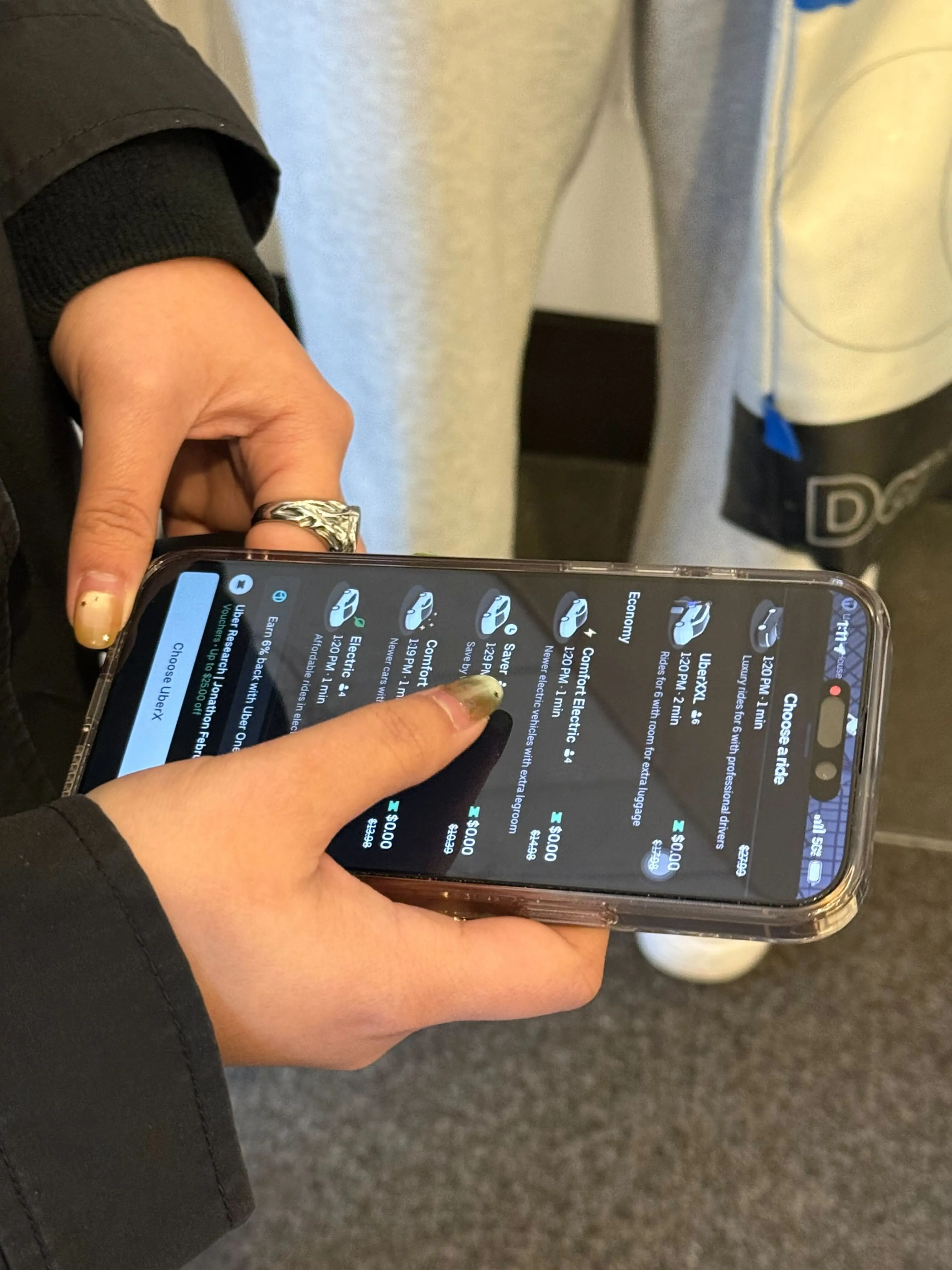
Starting location: Westlake Link Station
Destination: Chinatown Link Station
Participants requested a ride from the starting location to the destination.
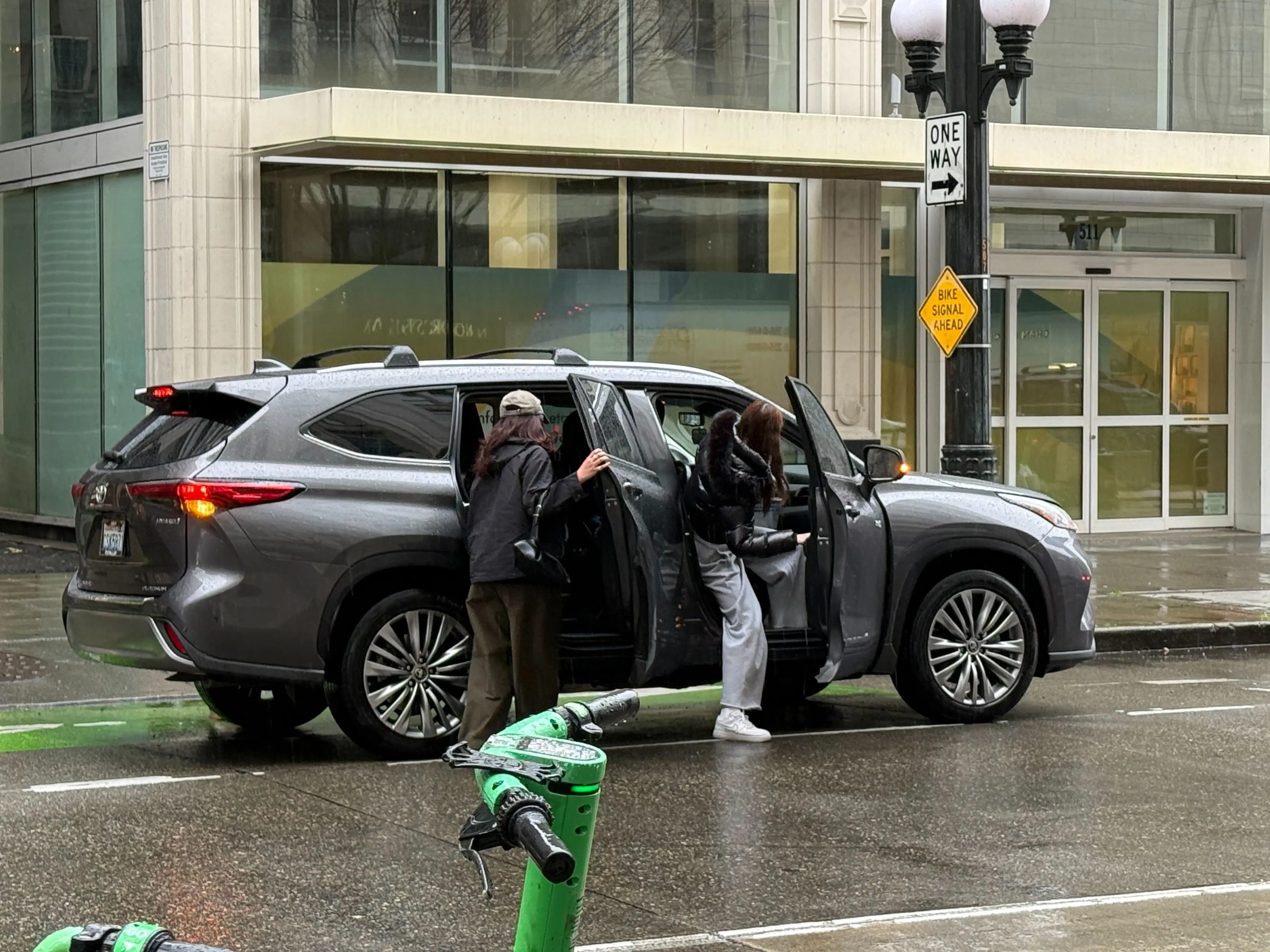
Real-world urban environment with high ride demand.
Conducted from late morning to afternoon, 11 AM–3 PM.

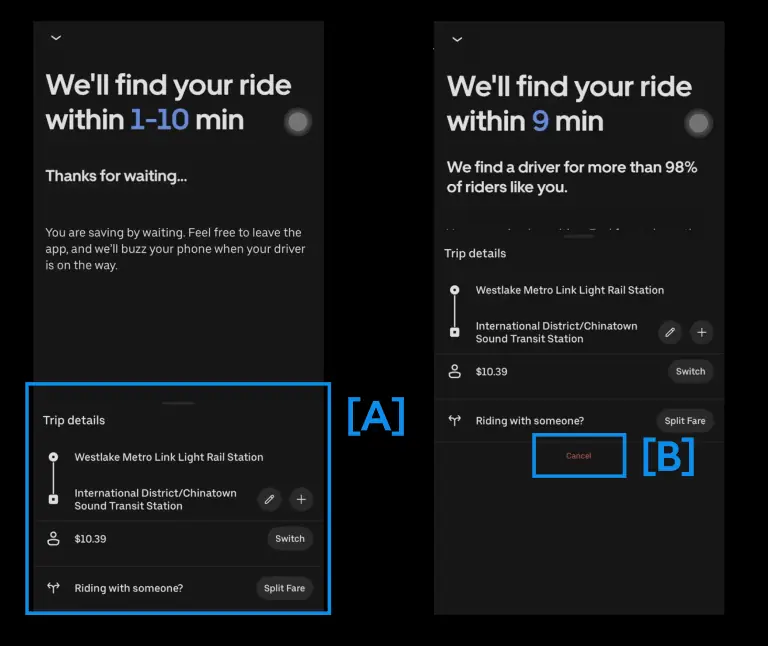
6 out of 6 participants quickly pulled the draggable sheet open [A] to locate the cancel button [B].
“So my first impression is that it’s not very visible at first glance. But I know that if I pull [the tab] up, it's gonna have like the little button right there for you to cancel.”
Participant 1
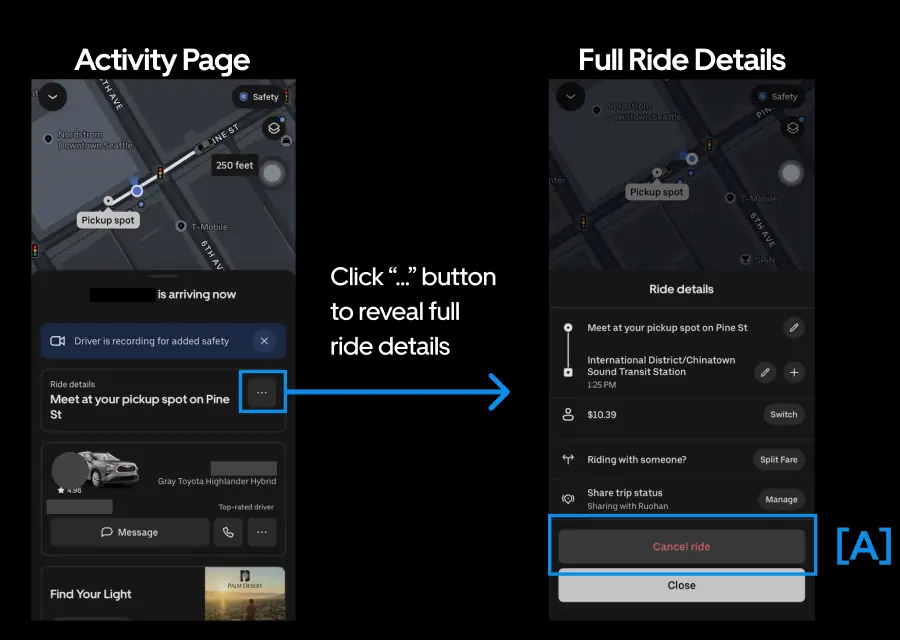
2 out of 6 participants viewed other screens or buttons before finding the cancel button. 4 out of 7 participants scrolled to the bottom of the screen, as they had before driver assignment, and then went to the top to locate the cancel button in Ride details.
Relocate the cancel button to be instantly visible without additional navigation.
Make the cancel button location more closely match before and after driver assignment stages.
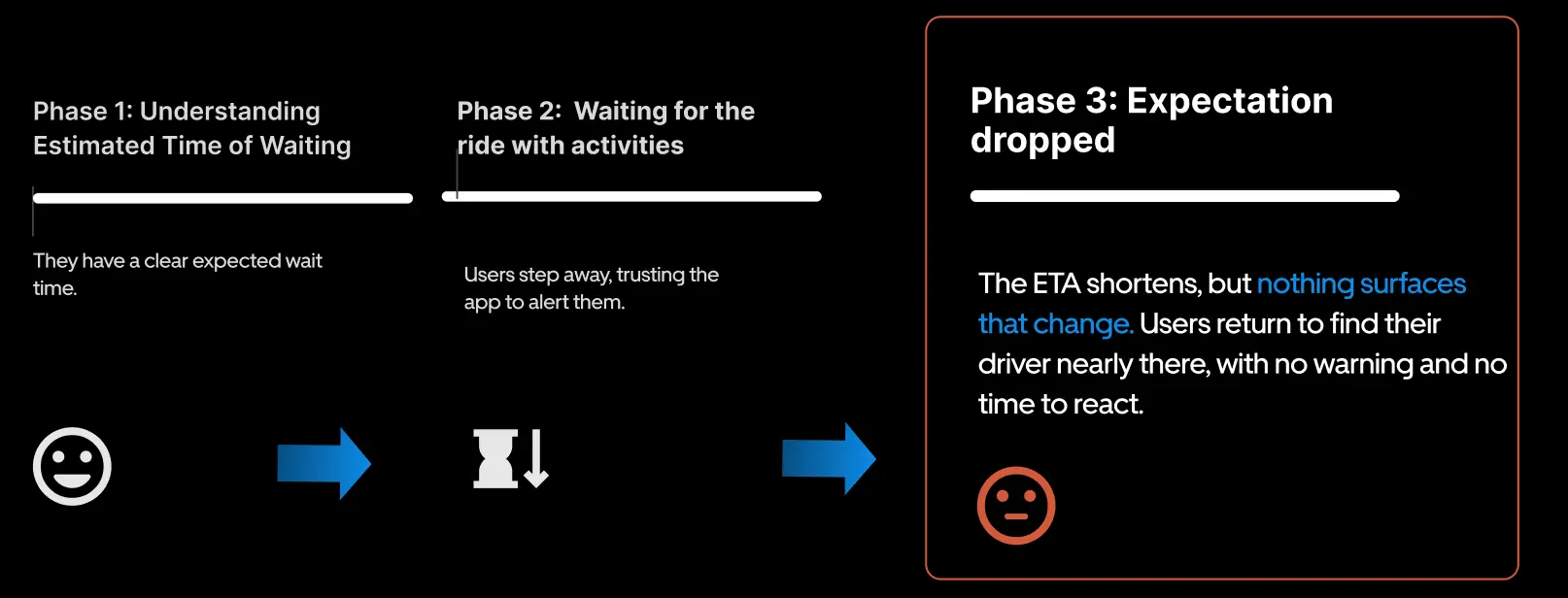
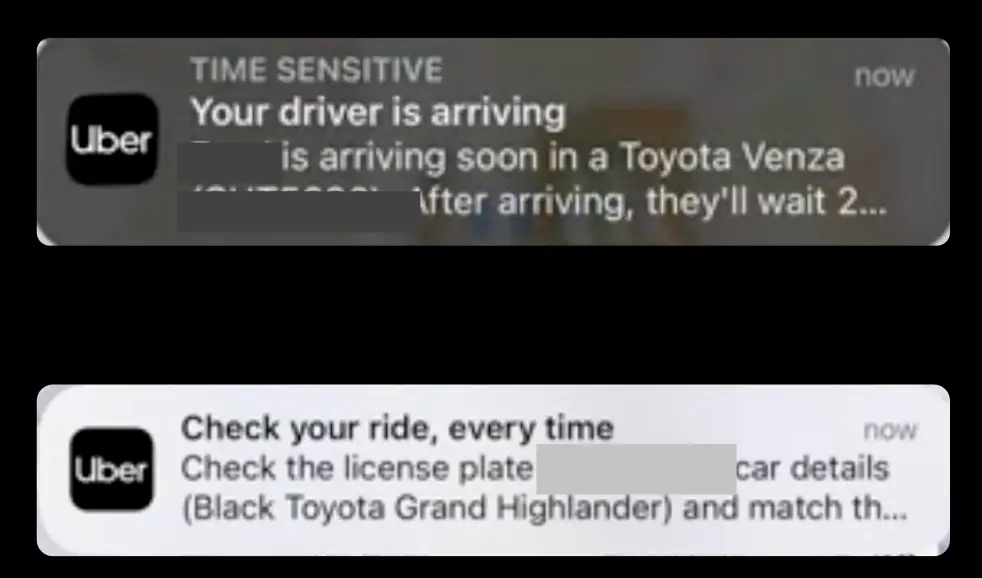
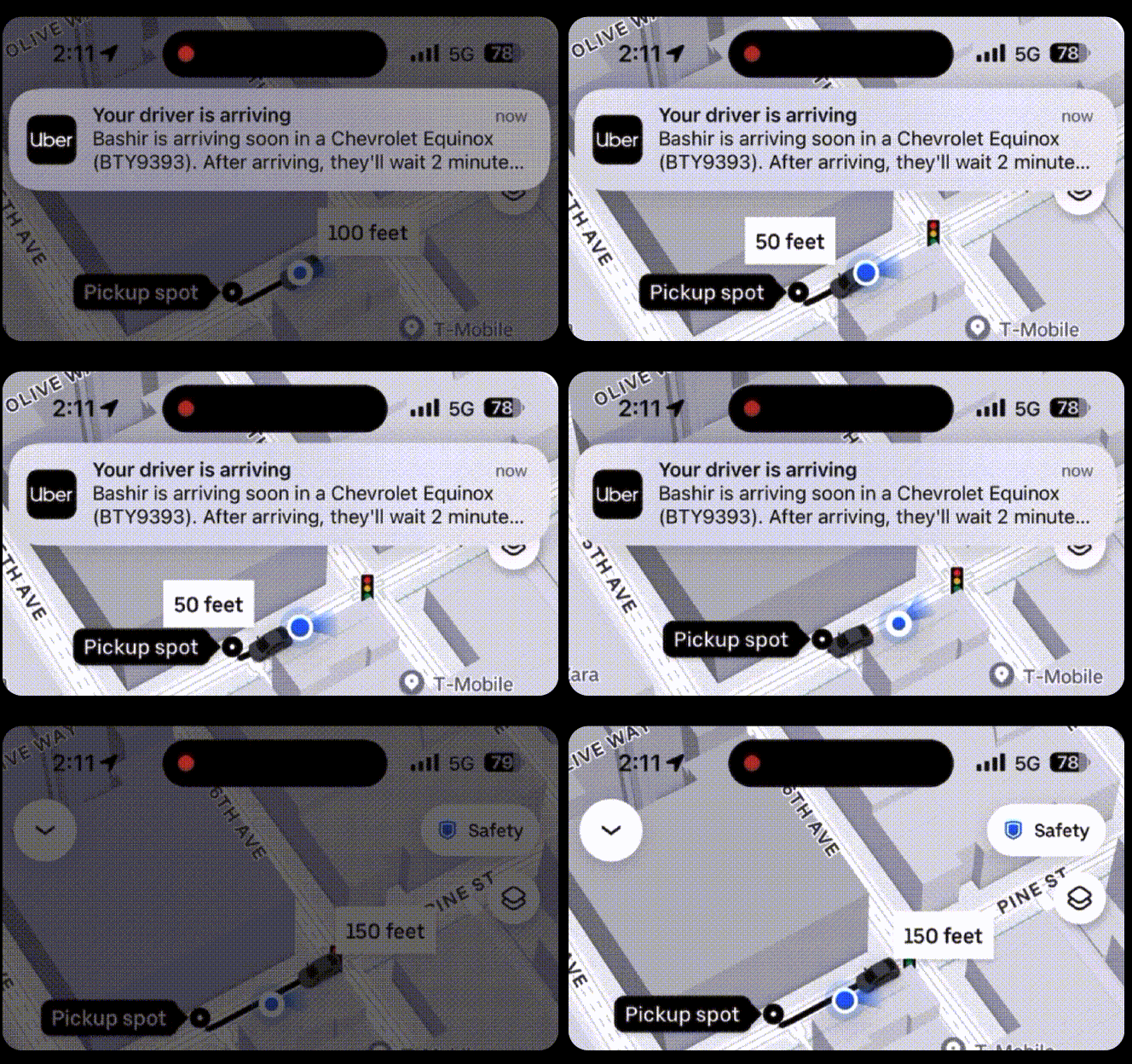
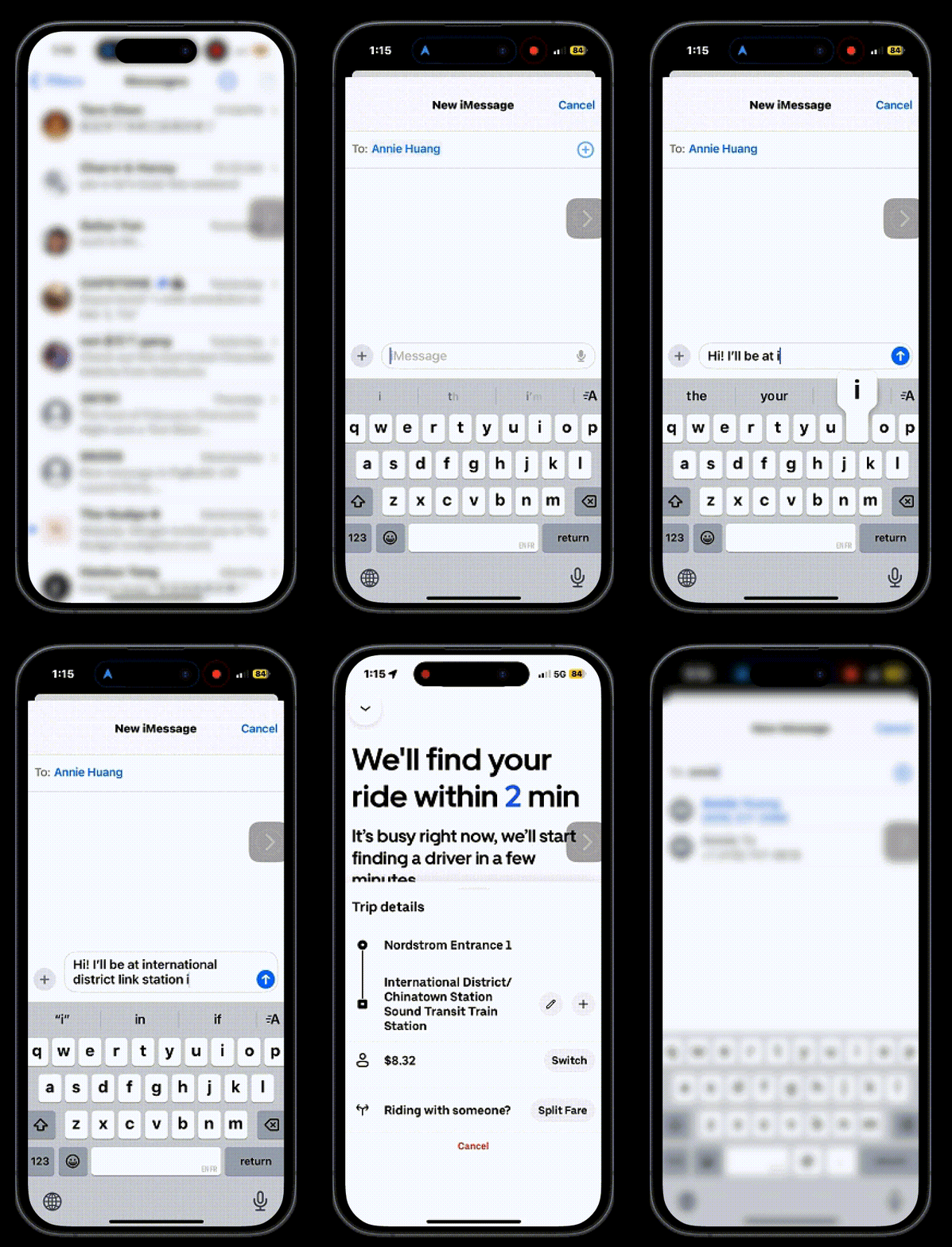
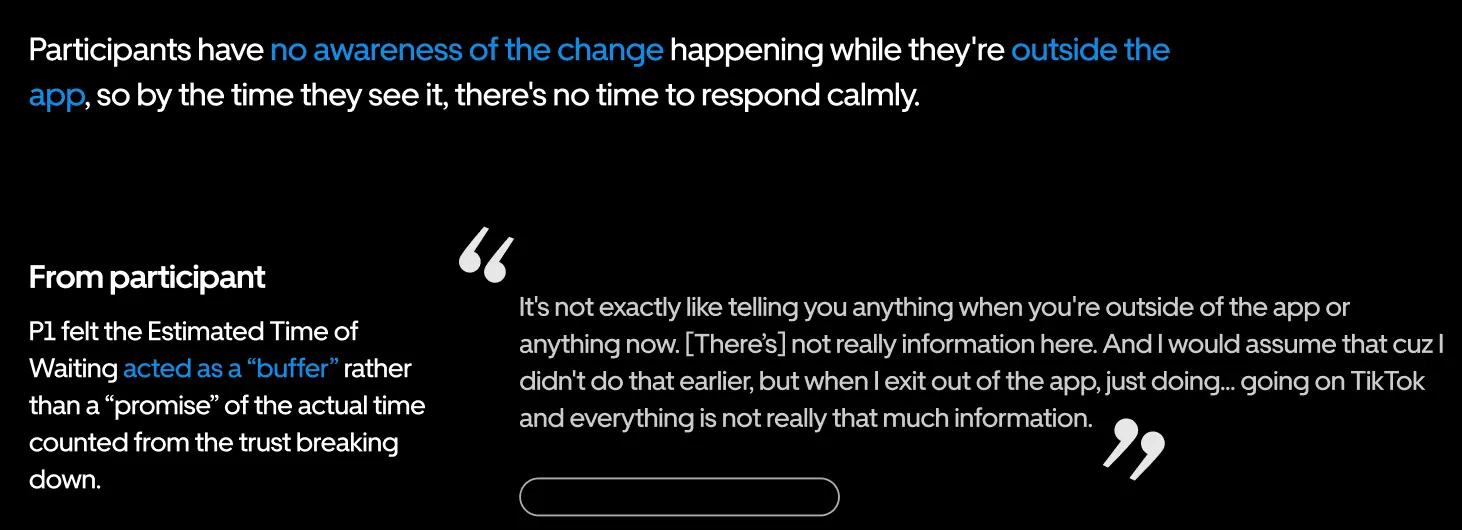
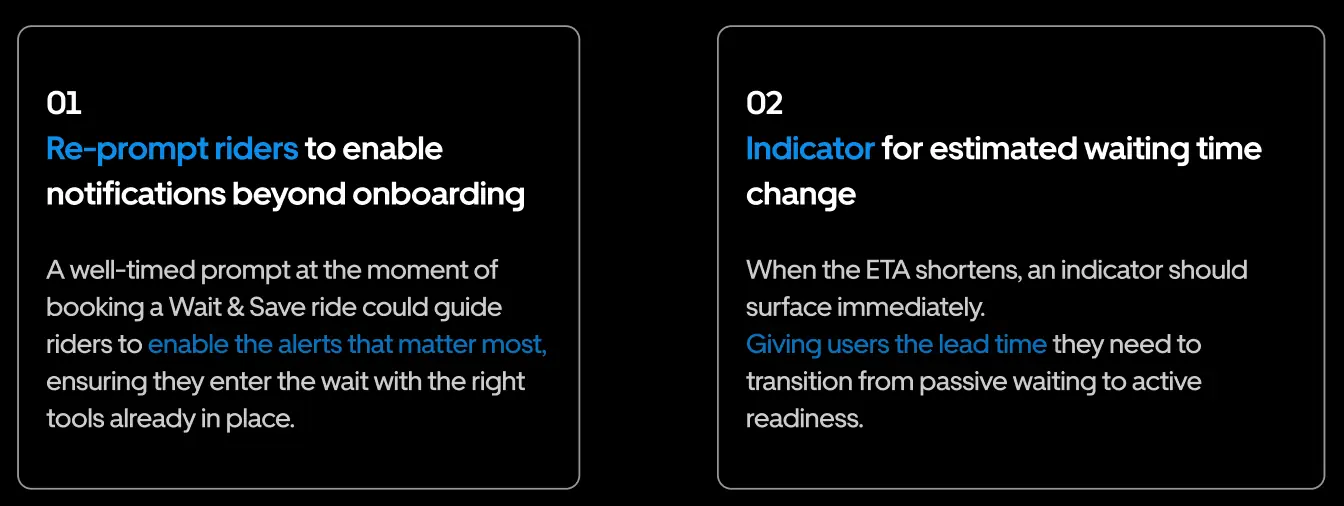
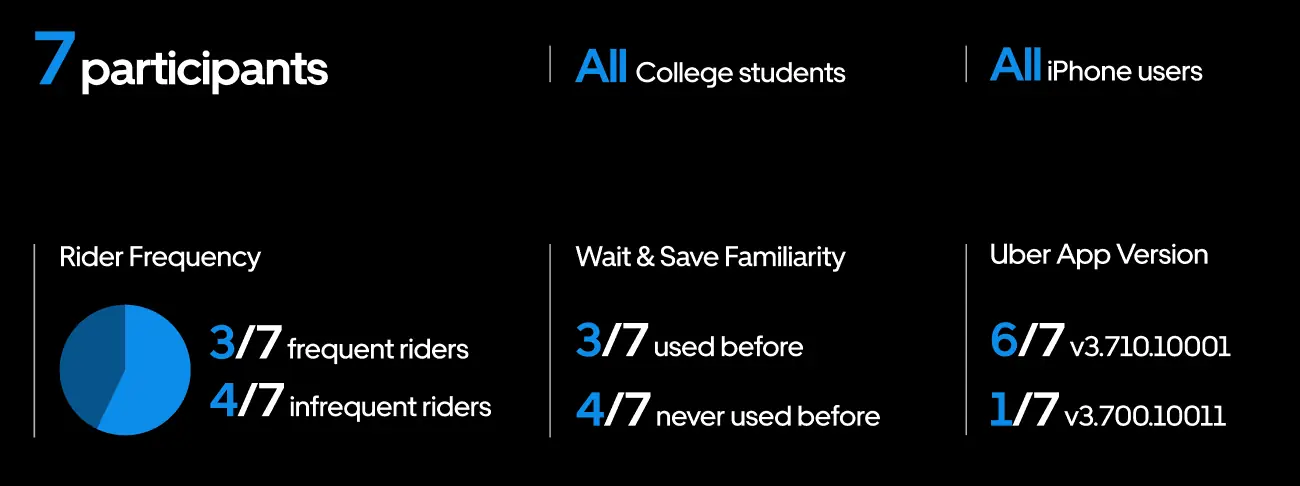
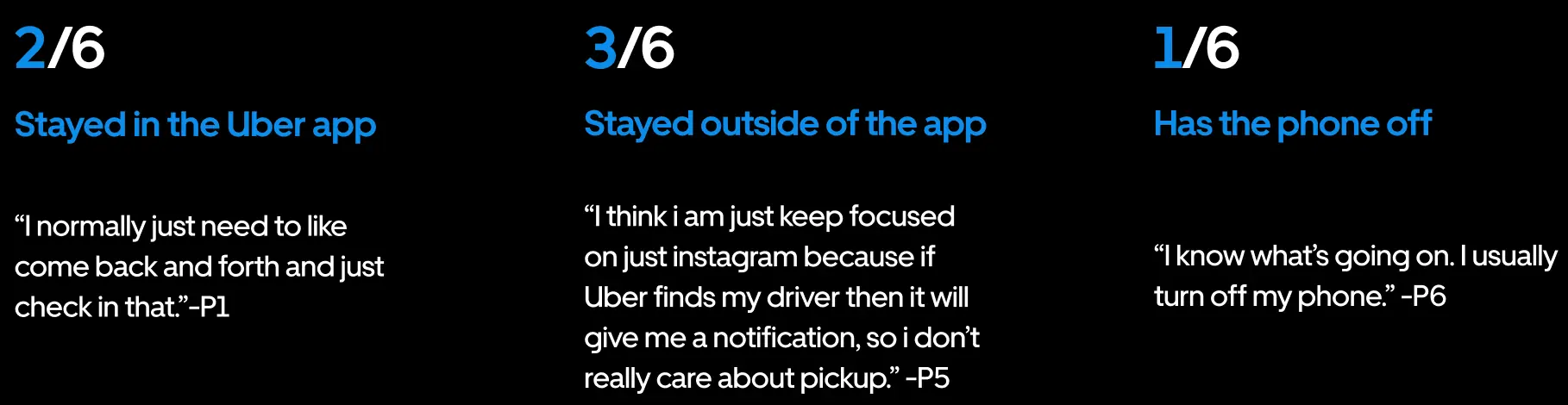
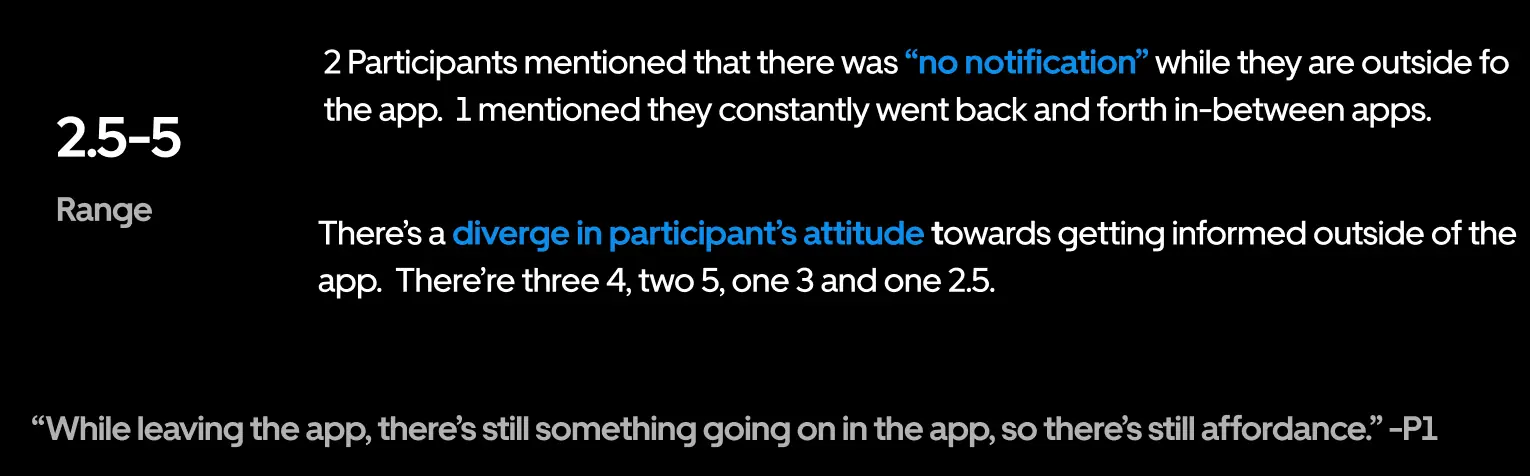
4 out of 7 participants did not receive the “Your driver is arriving” notification. Two of the four did not receive it inside the app, while one of the four did not receive it outside the app.
One participant, P3, received the “Check your ride” notification, but not “driver is arriving.”
A participant's iPhone notification settings did not always reflect how they actually wanted to be alerted during a ride. (P6)
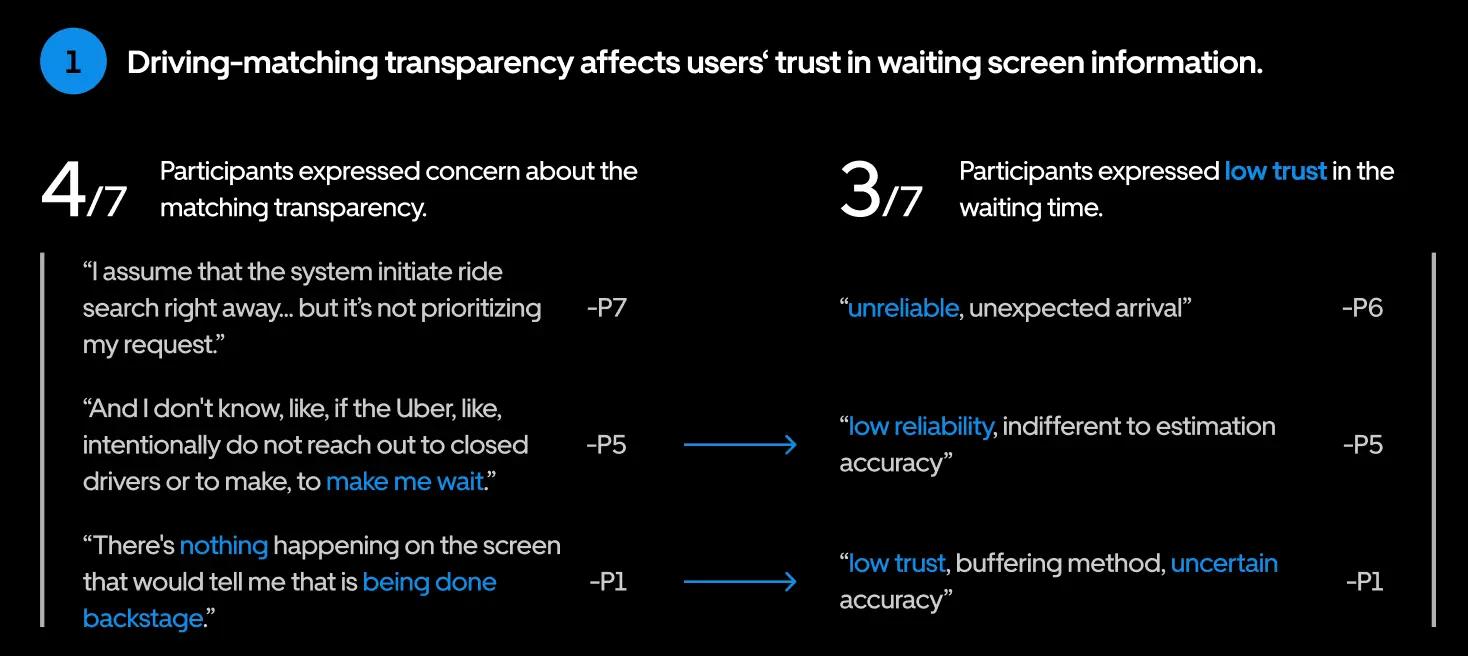
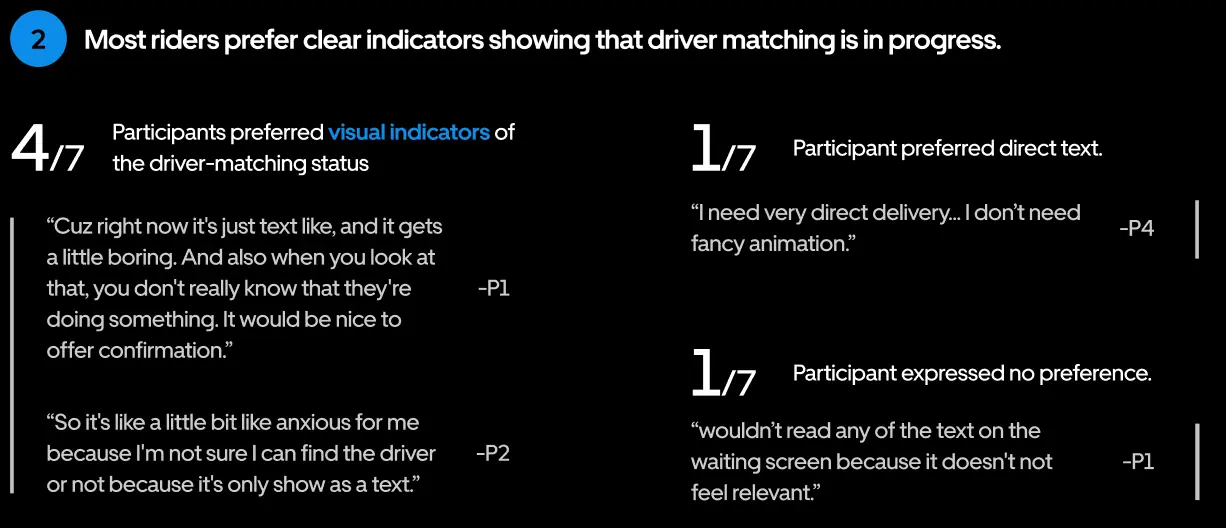
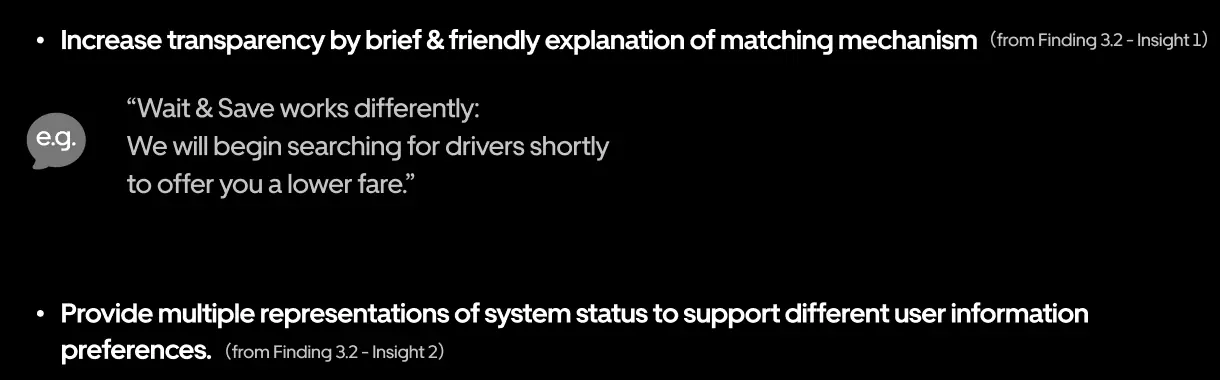
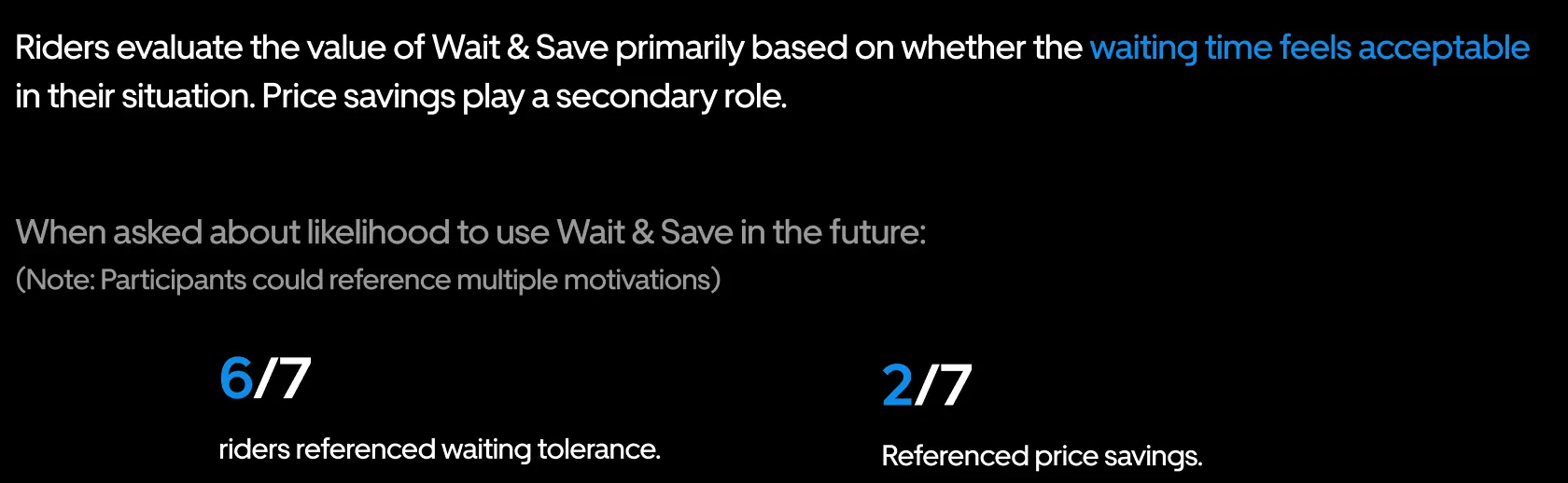
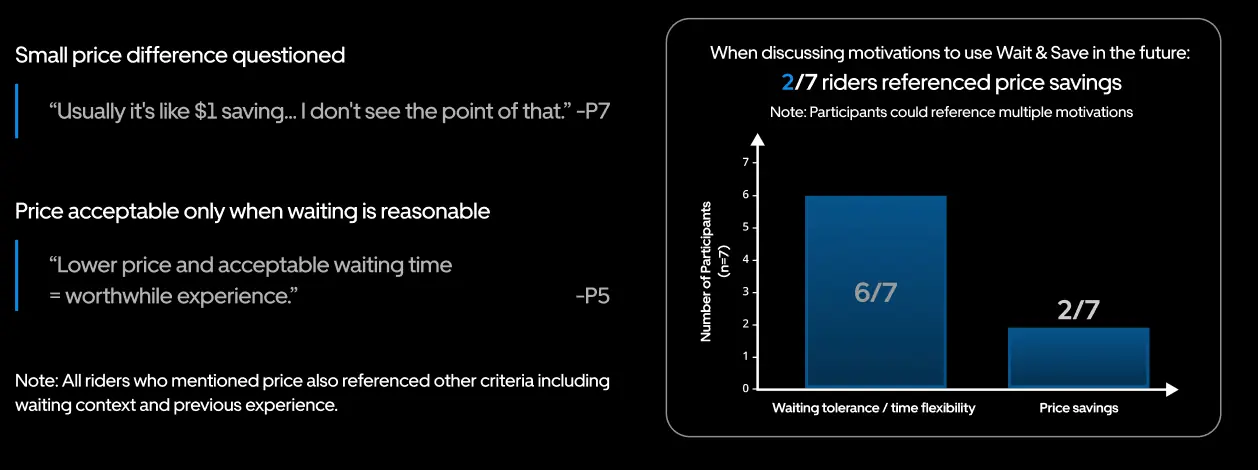
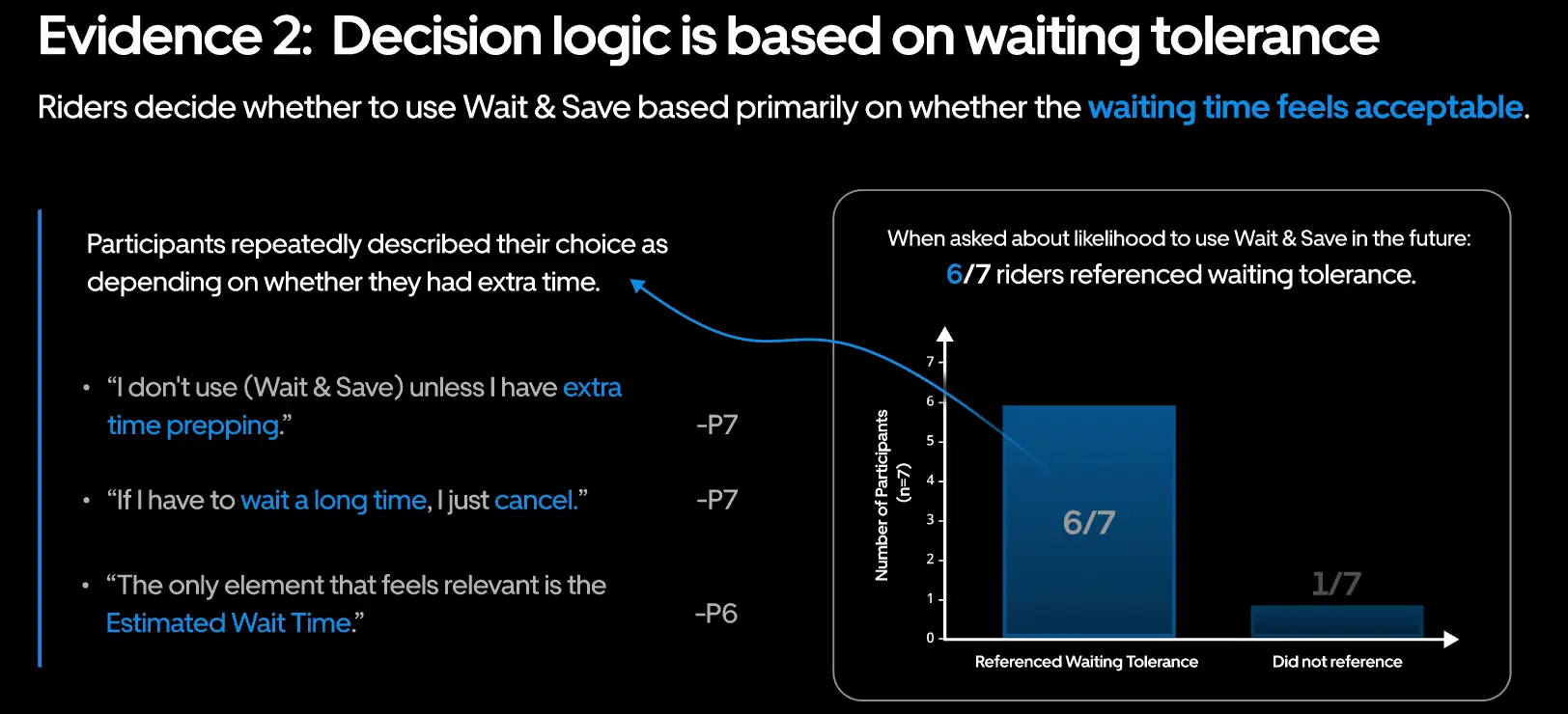
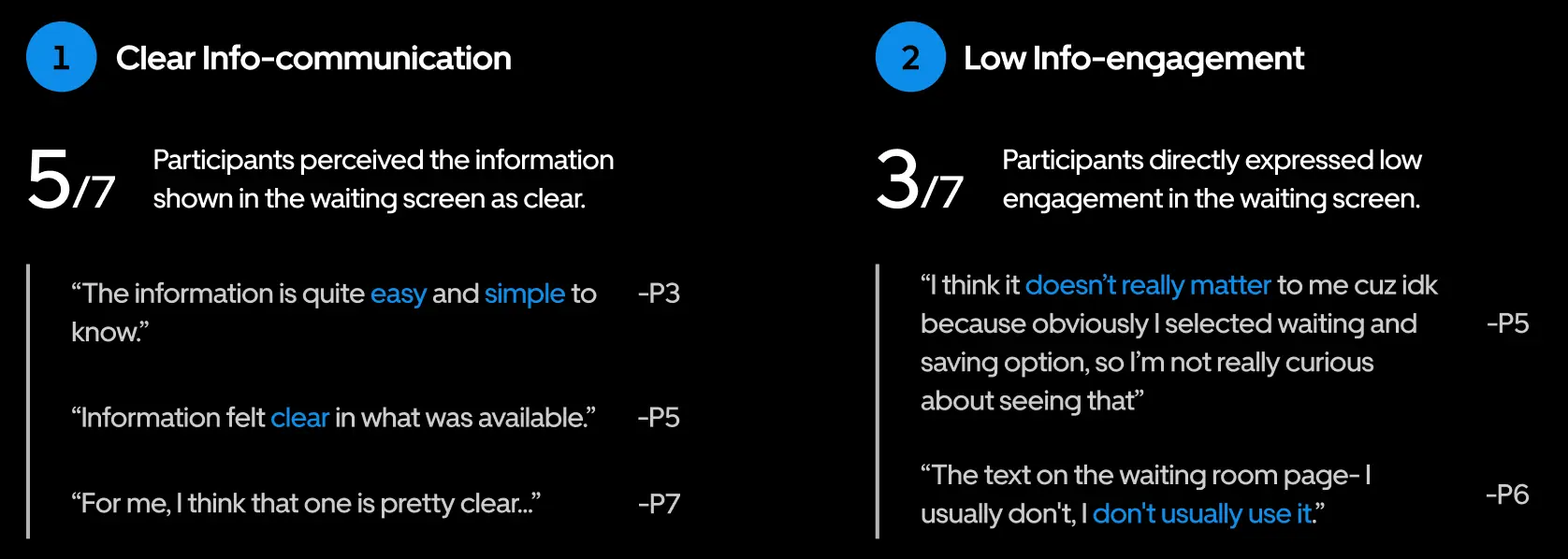
Riders evaluate the value of Wait & Save primarily based on whether the waiting time feels acceptable in their situation. Price savings play a secondary role. 6 out of 7 riders referenced waiting tolerance, while 2 out of 7 referenced price savings.
Before confirming, estimated waiting ranges help riders judge whether the wait feels acceptable. Once riders enter the driver-matching waiting room, the interface provides limited cues to confirm whether the wait is still within their tolerance and whether the cost-time trade-off remains worthwhile. This may lead to impatience and cancellations.